Classical
Pediment
A pediment is the low triangular gable that crowns the front of a classical building above the entablature, framed by horizontal and sloping cornices and enclosing a flat field called the tympanum.
A to Z
5 terms
Classical
A pediment is the low triangular gable that crowns the front of a classical building above the entablature, framed by horizontal and sloping cornices and enclosing a flat field called the tympanum.
Classical
A pilaster is a shallow, flat rectangular column that projects slightly from a wall, with a base, shaft and capital, used to divide and decorate a facade while giving the appearance of a column.
Modern
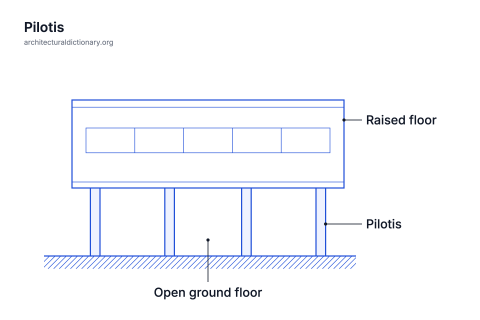
Pilotis are columns, piers or stilts that lift a building above the ground, leaving the ground level open for circulation, parking or landscape so that the main volume appears to float above the site.
Gothic & Medieval
A pointed arch is an arch formed by two curved sides that meet at a sharp point at the top, directing more of its load downward than a round arch and characteristic of Gothic architecture.
Classical
A portico is a porch leading to the entrance of a building, formed by a roof supported on a row of columns and often topped by a pediment, as on the front of a classical temple.